
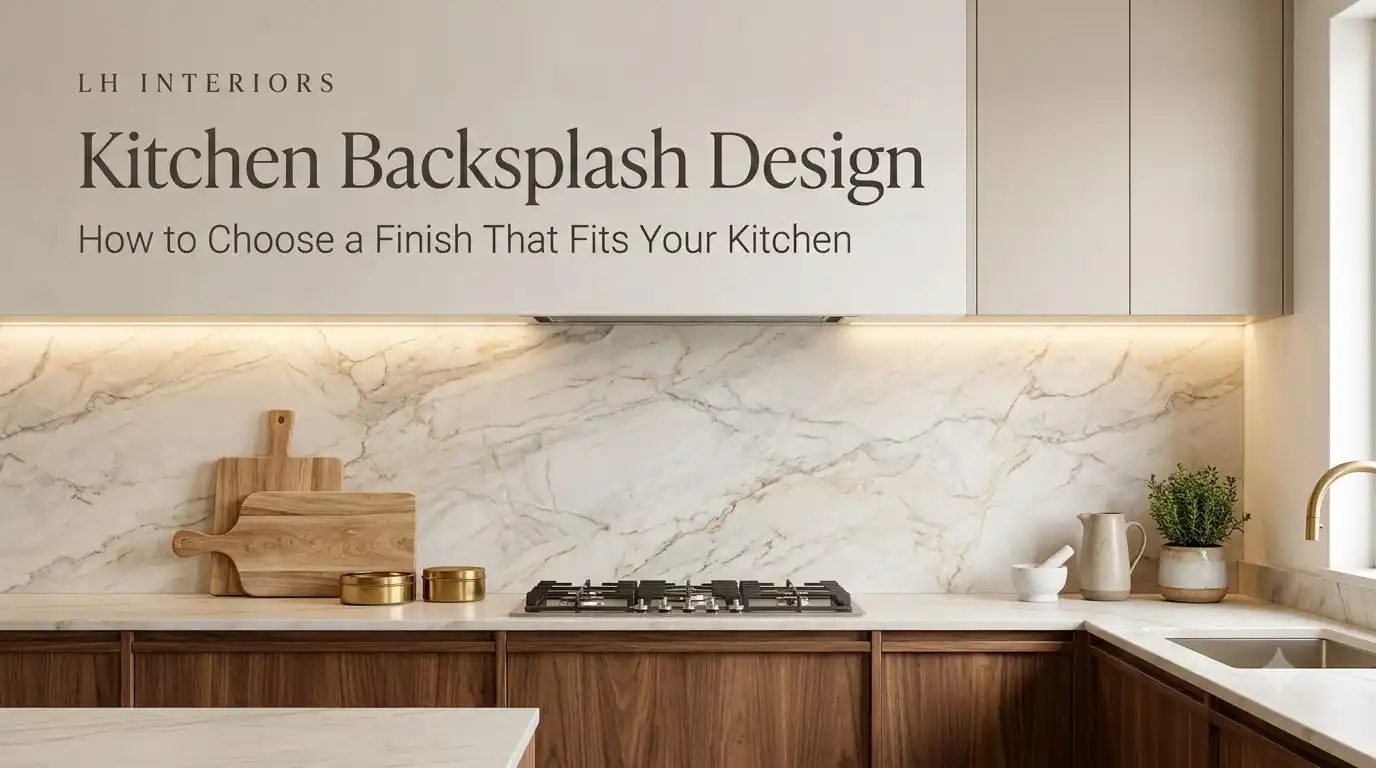
The wall behind your kitchen counter may look like a small part of the room. However, it can influence the appearance of your entire kitchen. The right kitchen backsplash design brings together the countertop, cabinets, and other finishes.
It also helps protect the wall around areas used for cooking and cleaning. A good choice should suit your daily routine, not just look attractive in a photograph.
When planning kitchen interiors, homeowners often select cabinets and countertops first. They may think about the backsplash only after those decisions are complete. This can make it harder to achieve a balanced result.
Planning these elements together gives you more control over the final look. Here are the main points to consider before choosing a backsplash for your home.
What Is a Kitchen Backsplash Design?
A backsplash is the finished wall surface behind a kitchen counter. It commonly covers the area near the sink and cooking zone. Some kitchens have a short strip, while others feature a taller surface.
Its appearance depends on the material, colour, pattern, and surrounding finishes. A simple backsplash can create a clean look without attracting too much attention. A more detailed finish can become a feature within the kitchen.
The right approach depends on your kitchen layout and personal preferences. It should also work with the other choices already made for the space.
1. Match the Backsplash With Your Countertop
The countertop and backsplash sit close together, so their relationship matters. They do not need to match exactly, but they should look connected.
For example, a countertop with strong patterns may work well with a quieter wall finish. A plain countertop can allow a little more detail on the wall.
Before making a decision, view samples together whenever possible. Colours can look different when placed beside other materials.
| Countertop appearance | Backsplash direction to consider |
| Plain and light | A subtle pattern or gentle colour contrast |
| Dark and simple | A lighter finish for visual balance |
| Strong natural pattern | A quieter surface that does not compete |
| Warm wood-inspired cabinets | A finish that complements the warmth |
| Several visible colours | A simple backsplash that connects them |
These are starting points rather than fixed rules. The final combination should suit the kitchen’s overall design.
2. Choose a Colour That Works With the Cabinets
Cabinets occupy a large part of many kitchens. Their colour can influence how the backsplash looks once everything is installed.
White or cream cabinets offer flexibility with many wall finishes. Wood-inspired shades can pair well with warm neutrals. Dark cabinets may benefit from a lighter backsplash when you want a visible contrast.
However, contrast is not always necessary. A similar colour palette can create a calm and connected appearance.
Think about the effect you want before choosing a shade. Do you want the backsplash to stand out, or should it blend into the background?
Both approaches can work when the colours are selected carefully.
3. Consider Everyday Cleaning
A kitchen backsplash is exposed to cooking splashes, water, and regular cleaning. Its appearance matters, but its maintenance needs deserve equal attention.
The area behind the cooking zone may need more frequent cleaning than other walls. The surface near the sink may experience repeated water splashes.
Ask about the cleaning requirements of any material you consider. Also check how the joints, edges, and corners will be finished.
| Planning point | What to check |
| Surface cleaning | Ask how the finish should be cleaned |
| Joints | Check how the gaps will be finished and maintained |
| Cooking area | Consider the type of splashes the surface may receive |
| Sink area | Plan for regular water exposure |
| Repairs | Ask how damaged sections could be addressed |
Do not assume every material has the same maintenance needs. Confirm the correct care instructions with the supplier or interior design team.
4. Understand the Different Finish Options
There is no single backsplash material that suits every kitchen. The best choice depends on the design, cleaning routine, budget, and installation requirements.
Some homeowners prefer a simple, continuous appearance. Others want a decorative surface that adds interest behind the counter.
Before selecting a finish, compare the available samples and understand their care requirements.
| Finish direction | What it can contribute | What to consider |
| Plain, light-coloured surface | A clean and understated appearance | Check how visible everyday marks may be |
| Patterned finish | Adds detail to a simple kitchen | Keep nearby finishes from looking too busy |
| Stone-inspired finish | Connects with natural-looking countertops | Compare the pattern and maintenance needs |
| Glossy appearance | Reflects light and creates a polished look | Check reflections under your kitchen lighting |
| Matte appearance | Gives a quieter, less reflective look | Confirm cleaning requirements for the chosen product |
This table is a starting point, not a substitute for checking individual products. Different products within the same category can have different properties.
5. Plan the Backsplash Height Before Installation
The backsplash height affects how the wall relates to cabinets and countertops. A short section may suit one design, while another kitchen may benefit from a taller finish.
The decision should account for the cabinet arrangement and the areas that need wall protection. It should also consider any open wall space above the counter.
Avoid choosing a height based only on a reference image. The proportions may not suit your kitchen.
Discuss the final dimensions during the design stage. This helps coordinate the finish with cabinets, sockets, appliances, and other wall details.
6. Think About Lighting and Reflections
Kitchen lighting can change how a backsplash looks throughout the day. Natural light, ceiling lights, and task lighting may all affect its appearance.
A glossy finish may reflect nearby lights more strongly. A patterned surface may look different under direct illumination. A subtle finish can also appear more prominent when the light falls across it.
Review samples under lighting similar to what you plan to use. This is especially useful when choosing between two similar shades.
Kitchen lighting should support everyday tasks as well as the overall appearance. The backsplash and lighting work best when planned together.
7. Avoid Making Every Surface a Feature
It is tempting to choose statement cabinets, a detailed countertop, and a bold backsplash together. However, too many competing finishes can make the kitchen feel visually crowded.
Choose which element should attract the most attention. The remaining surfaces can provide balance.
For example, patterned cabinets may work better with a simple wall finish. A distinctive backsplash may look more effective beside understated cabinets.
This does not mean your kitchen must look plain. It means each design choice should have a clear purpose.
8. Coordinate the Backsplash With the Complete Kitchen
A backsplash should not be selected in isolation. Its colour and finish need to work with the floor, cabinets, countertop, lighting, and nearby spaces.
This matters especially in open kitchens that connect with dining or living areas. A strong colour or pattern may remain visible from other parts of the home.
Reviewing all the main finishes together can help prevent last-minute changes. It also gives the design team a clearer picture of the intended result.
For homeowners working with interior designers in Hyderabad, this coordination is useful during the planning stage. It helps connect individual choices with the larger home interior.
Common Backsplash Planning Mistakes
A few avoidable decisions can make the finished kitchen harder to maintain or less balanced.
- Choosing the colour too early: Review it with the countertop and cabinets before confirming the finish.
- Ignoring cleaning needs: Ask about care instructions before selecting a material.
- Copying a reference without checking proportions: Confirm that the design suits your actual kitchen.
- Forgetting the lighting: Review the sample under the planned lighting conditions.
- Deciding after cabinet installation: Early coordination can reduce unnecessary changes during execution.
A little planning can help you make choices with greater confidence.
Frequently Asked Questions
What is the purpose of a kitchen backsplash?
A backsplash provides a finished wall surface behind the counter. It can help protect areas exposed to cooking splashes and water while contributing to the kitchen’s overall appearance.
Should the backsplash match the countertop?
It does not need to match exactly. The colours and patterns should work together without making the kitchen feel visually crowded.
Which backsplash colour suits a small kitchen?
Light or neutral shades can create a quieter appearance, but they are not the only suitable choices. Consider the cabinets, countertop, lighting, and overall colour scheme before deciding.
Should I choose the backsplash before or after the cabinets?
It is helpful to explore the options early and confirm the final choice alongside the cabinets and countertop. This allows the different finishes to be coordinated before installation.
Can a backsplash become the main feature of a kitchen?
Yes, it can. A distinctive pattern or colour may become the main visual feature when the surrounding finishes provide enough balance.
Plan Your Kitchen as One Complete Space
The backsplash may cover only part of a kitchen wall, but it influences how several finishes come together. Colour, cleaning needs, lighting, and proportions all deserve attention before installation.
LH Interiors plans kitchen interiors around the layout, materials, lighting, and overall requirements of the home. If you are planning a new kitchen or updating an existing one, discuss your preferences with the design team.
A well-coordinated design can help your kitchen feel connected, practical, and suited to everyday life.