
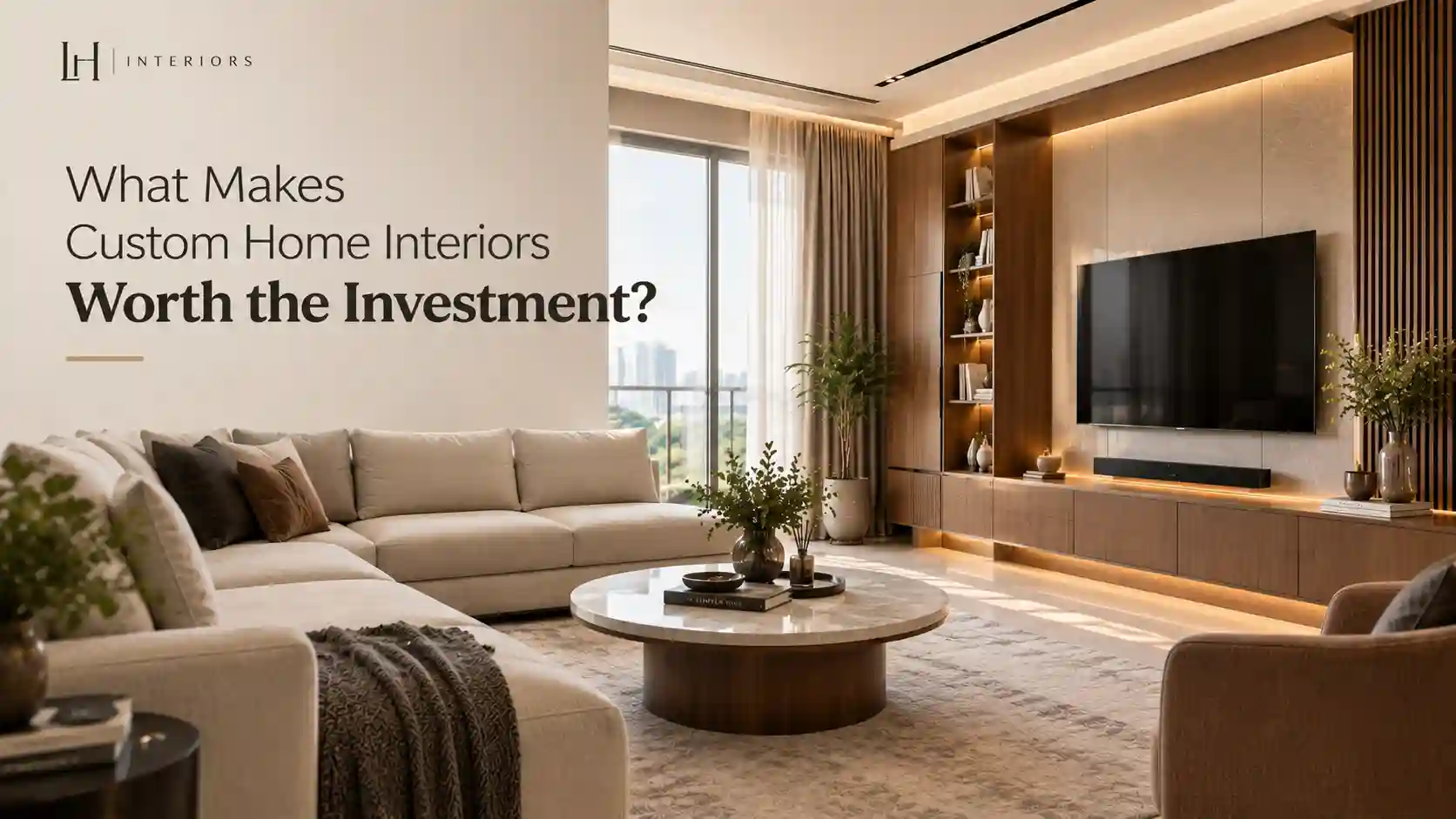
When planning a new home, it is easy to get excited about furniture, colours and beautiful
room designs. But once you start comparing quotations, another question comes up: are custom home interiors really worth the investment?
The answer depends on how well your home needs to work for you. Custom home interiors allow you to plan storage, furniture, layouts and finishes around your space and daily routine. Instead of adjusting your lifestyle to standard furniture, you can make design choices that suit the way you live.
This does not mean every item must be customized. Some ready-made furniture may work perfectly well. The real value comes from knowing where customization makes a difference and where a simpler option is enough.
Let’s look at what homeowners should consider before making this decision.
1. Your Home Can Be Designed Around Your Daily Routine
Every family uses its home differently. One household may need a large dining area for family meals. Another may need extra kitchen storage or a quiet corner for working from home.
Standard furniture offers convenient choices, but its dimensions and features may not match every room or requirement.
Custom home interiors start with understanding how you use each space. The design can then reflect your habits, preferences and practical needs.
For example, consider a family that cooks regularly and stores groceries in bulk. A kitchen with carefully planned drawers, shelves and pantry storage may suit them better than a layout chosen only for its appearance.
Similarly, a bedroom wardrobe can be planned around the clothes, accessories and other items you actually use.
The goal is not to add more furniture. It is to make the available space work better.
2. Customization Can Make Better Use of Available Space
A room can look spacious when it is empty but feel crowded after furniture arrives. This often happens when furniture sizes are selected without considering movement, door openings and other requirements.
Custom furniture can be designed to suit the dimensions of the room. This can be particularly useful around corners, wall recesses, awkward gaps and areas where standard furniture does not fit comfortably.
Consider the following examples.
| Area | Common challenge | How customization may help |
| Living room | A TV unit takes up too much floor space | Plan storage and display space around the available wall |
| Bedroom | A standard wardrobe leaves unused gaps | Design storage to suit the wall dimensions |
| Kitchen | Frequently used items are difficult to reach | Plan drawers and shelves around daily cooking habits |
| Dining area | Storage furniture interrupts movement | Coordinate the unit’s dimensions with the dining layout |
| Entrance | Shoes and everyday belongings collect near the door | Plan a suitable storage unit where space permits |
These improvements depend on the room’s dimensions and site conditions. Customization does not automatically make a room larger, but thoughtful planning can reduce wasted space and make movement easier.
3. Storage Can Be Planned Around What You Own
Storage is one of the most practical reasons to consider customized interiors.
Think about what happens after moving into a new home. Kitchen utensils, groceries, clothing, luggage, cleaning supplies and everyday belongings gradually occupy the available space.
If storage has not been planned properly, counters become crowded and cupboards become difficult to organize.
A customized storage plan starts with understanding what needs to be stored and how often you use it.
In the kitchen, frequently used utensils may need easy-to-reach drawers. Less frequently used appliances can go into suitable cabinets. In a bedroom, the wardrobe layout can reflect the balance between hanging clothes, folded garments and accessories.
Before finalizing storage, ask yourself:
- What items do we use every day?
- Which belongings need long-term storage?
- Do we need more shelves, drawers or hanging space?
- Are the proposed units easy to reach and clean?
- Will the storage still suit our needs if our routine changes?
Answering these questions before manufacturing begins can help prevent unnecessary additions later.
4. The Design Can Reflect Your Personal Style
Many homeowners save interior photographs before starting a project. One picture may have warm wooden finishes, another may show a simple kitchen, and a third may feature a bold TV wall.
The challenge is bringing these ideas together in one home.
Custom home interior design gives you more control over how colours, materials, furniture and finishes work together. You can decide which elements deserve attention and which should remain simple.
For instance, if you prefer a calm bedroom, you might choose understated wall finishes, practical bedside storage and warm lighting. If you enjoy entertaining guests, you may want a living room layout that supports comfortable seating and easy movement.
Personalization does not mean adding a different design feature to every wall. A consistent approach often makes the home feel more connected.
The important thing is to select finishes and features that suit your preferences and remain practical for everyday use.
5. Material Selection Becomes More Intentional
The appearance of a cabinet is only one part of the decision. Its intended use, location, maintenance needs and exposure to moisture also matter.
Customized interiors allow you to consider these factors while selecting materials and finishes. However, the right choice depends on the application, product specifications and installation quality.
Here are some questions worth discussing with your designer.
| Design element | What to consider before choosing |
| Kitchen cabinets | Moisture exposure, cleaning needs, construction quality and finish |
| Bedroom wardrobes | Daily use, storage requirements, hardware and ease of maintenance |
| Living room units | Weight of stored items, cable management and surface care |
| Countertops | Stain resistance, heat exposure, cleaning and intended use |
| Decorative finishes | Colour consistency, upkeep and compatibility with nearby materials |
Do not choose a material simply because it looks expensive. Ask how it will perform in the location where it will be installed.
It is also worth confirming the material specifications in the quotation. Product names alone may not explain the complete construction, finish or hardware being supplied.
6. Coordinated Planning Can Reduce Avoidable Rework
A home interior project involves several connected decisions. Furniture dimensions affect electrical points. Kitchen appliances influence cabinet layouts. Ceiling designs interact with lighting and air-conditioning requirements.
When these elements are planned separately, adjustments may become necessary during installation.
For example, a wardrobe design may need to change if the available wall space was measured incorrectly. A kitchen cabinet may require modification if the appliance dimensions were not confirmed early enough.
A coordinated design process helps identify these relationships before work begins.
This does not mean every project will proceed without changes. Site conditions, product availability and homeowner preferences can still affect the plan. However, clear drawings, confirmed measurements and timely approvals can help reduce avoidable problems.
The benefit is not simply a better-looking finish. It is a more organized process in which decisions are made with the rest of the home in mind.
7. Is Custom Home Interior Design More Expensive?
Custom interiors can require a larger budget than some standard furniture options. The final cost depends on the scope of work, materials, dimensions, hardware, finishes and installation requirements.
However, the lowest initial quotation is not always the most useful comparison. Two proposals may include different materials, storage features or amounts of work.
Before comparing prices, check what each quotation covers.
| Cost consideration | Questions to ask |
| Design and planning | Are drawings and revisions included? |
| Materials | What exact board, surface and finish specifications are proposed? |
| Hardware | Which hinges, drawer channels and accessories are included? |
| Installation | What fitting and finishing work is covered? |
| Additional work | Are electrical, plumbing, painting or civil changes included? |
| After-sales support | What support or warranty terms apply? |
This comparison helps you understand what you are paying for.
You can also decide where customization deserves more of the budget. A kitchen used every day may benefit from careful storage and durable materials. A decorative feature that has little practical value may not need an expensive finish.
The aim is to spend according to your needs rather than assuming that every customized element must be premium.
8. Customization Does Not Mean Everything Must Be Made to Order
One common misunderstanding is that a fully customized home requires every piece of furniture to be specially designed.
That is not necessarily true.
A mix of customized and ready-made furniture can be a sensible choice. Built-in wardrobes, kitchen cabinets and units that need to fit specific dimensions may benefit from customization. A movable side table, accent chair or occasional piece may be easier to purchase ready-made.
The decision should depend on fit, function, budget and personal preference.
| Item | When customization may make sense | When a standard option may work |
| Wardrobe | Unusual dimensions or specific storage needs | A suitable standard unit fits the room |
| Kitchen cabinets | Layout and appliance integration require coordination | Standard components meet the layout requirements |
| TV unit | Wall dimensions or cable arrangements need a tailored solution | A ready-made unit fits comfortably |
| Dining furniture | Specific dimensions or seating requirements | Available furniture suits the family |
| Accent furniture | A particular size or feature is essential | The piece is mainly decorative and movable |
This balanced approach can help homeowners focus their spending on the areas where a tailored solution adds real value.
9. What Should You Check Before Investing in Custom Interiors?
Before approving a design, look beyond the final 3D image. A realistic plan should consider how the room will function after the project is complete.
Use this checklist during your discussions with an interior designer.
- Room dimensions and site measurements have been checked.
- Furniture placement allows comfortable movement.
- Storage has been planned around actual household needs.
- Appliance dimensions and service requirements are confirmed.
- Material and finish specifications are documented.
- Lighting and electrical requirements are coordinated with the layout.
- The quotation clearly explains the scope of work.
- Changes and approvals are recorded before manufacturing or installation.
- Maintenance requirements have been considered.
- Support and warranty terms have been clarified.
You do not need to make every decision alone. A professional can help you understand the available options, but your daily habits and priorities should remain central to the process.
10. How LH Interiors Can Help You Plan Your Home
Custom home interiors work best when design decisions begin with the people who will use the space.
LH Interiors offers residential interior design services covering areas such as living rooms, bedrooms, dining spaces and kitchens. Its website also describes customized woodwork and a coordinated design and execution process. You can explore the home design services, kitchen interiors and bedroom interiors pages to learn more.
When discussing your requirements, share how you use each room, what you need to store, which materials you prefer and where you want to prioritize your budget.
These details help make the design conversation more useful than starting with photographs alone.
A good interior plan should reflect your requirements while accounting for the home’s dimensions, practical limitations and overall budget.
Conclusion
Custom home interiors can be worth the investment when they solve real problems in your home. Better-planned storage, suitable furniture dimensions, coordinated materials and layouts designed around your routine can make everyday living more comfortable.
But customization is not automatically the best choice for every item. Standard furniture can work well when it fits the room and meets your needs.
Before investing, identify the areas where a tailored solution will make the biggest difference. Compare quotations carefully, confirm material specifications and finalize important decisions before work begins.
Planning your home interiors in Hyderabad? Discuss your layout, storage needs and design preferences with LH Interiors to explore options that suit your home.
Frequently Asked Questions
1. Are custom home interiors worth the extra cost?
They can be worth the cost when they address specific needs, such as unusual room dimensions, storage requirements or coordinated finishes. The value depends on the design, materials, workmanship and how well the result suits your lifestyle.
2. What is the difference between custom and modular interiors?
Custom interiors focus on solutions tailored to the space and requirements. Modular interiors use components manufactured to standardized or predefined dimensions. The two approaches can overlap, and either may be suitable depending on the project.
3. Which areas of a home benefit most from customization?
Kitchens, built-in wardrobes and storage units often benefit from careful customization because their dimensions and functions are closely tied to the room. Other furniture can be customized when a particular size or feature is needed.
4. Can I combine ready-made furniture with custom interiors?
Yes. Many homeowners combine built-in cabinetry with ready-made chairs, tables and accent furniture. This can provide flexibility while allowing customization where fit and function matter most.
5. What should I discuss before starting a custom interior project?
Discuss your room layouts, storage needs, preferred materials, budget, appliance dimensions, electrical requirements, project scope and approval process. Confirm important specifications before manufacturing or installation begins.
6. Does custom interior design guarantee higher property value?
No. Customized interiors may improve usability and appeal, but resale value depends on many factors, including location, property condition, buyer preferences and market conditions. Design decisions should first support your own needs and budget.