
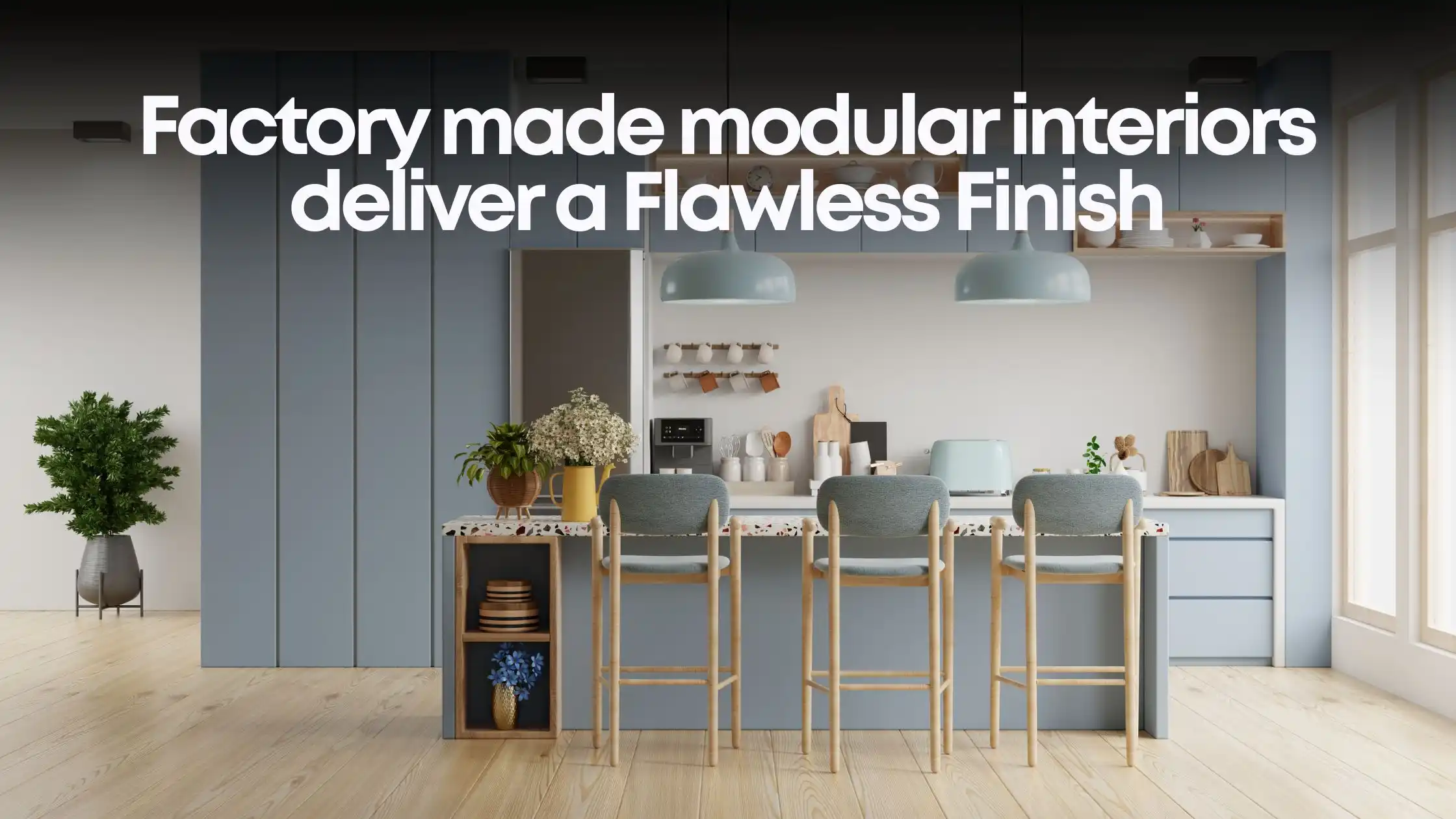
When you’re investing in your dream home, you expect your furniture to look just as good years later as it did on the day it was installed. That’s one of the biggest reasons why modular interiors have become the preferred choice for modern homeowners.
Unlike traditional on-site carpentry, factory-made modular interiors are manufactured in a controlled environment using advanced machinery and precise measurements. The result is furniture that looks cleaner, fits better, and offers consistent quality throughout the home.
If you’re planning a new home or renovating an existing one, understanding how factory production works will help you make a more informed decision.
What Are Modular Interiors?
Modular interiors are furniture systems that are manufactured in a factory before being transported to your home for installation.
Instead of cutting, shaping, and assembling furniture on-site, every cabinet, wardrobe, drawer, and shelf is produced according to a detailed design plan. Once manufacturing is complete, the finished units are delivered and installed with minimal adjustments.
This process improves both quality and efficiency.
How Factory Manufacturing Improves Quality
One of the biggest advantages of factory-made modular interiors is precision.
Every furniture component is manufactured using computer-controlled machines that follow exact measurements. This ensures each panel is cut accurately, allowing cabinets and wardrobes to fit together perfectly during installation.
Because the process is standardised, the quality remains consistent from the first panel to the last.
CNC Machines Deliver Accurate Results
Modern factories use CNC (Computer Numerical Control) machines to manufacture furniture components.
These machines read digital design files and cut materials with remarkable accuracy. Whether it’s a kitchen cabinet, wardrobe shutter, or decorative panel, every piece is produced exactly according to the approved design.
This precision helps eliminate uneven gaps, misaligned doors, and fitting issues that are more common with manual cutting.
Better Edge Finishing Increases Durability
The edges of every furniture panel need proper protection to prevent moisture from entering the core material.
In factory-made modular interiors, edge banding machines apply protective strips evenly using controlled heat and pressure. This creates smooth, durable edges that resist peeling, chipping, and everyday wear.
Proper edge finishing not only improves the appearance of furniture but also extends its lifespan.
Consistent Finish Throughout Your Home
One challenge with traditional furniture is maintaining the same finish across different rooms.
Factory-made modular interiors solve this problem by using the same materials, machines, and manufacturing process for every component. This creates consistency in colour, texture, and overall finish throughout the home.
Whether it’s your kitchen, bedroom, living room, or study, every space maintains the same design quality.
Faster Installation with Less Disruption
Since most of the manufacturing is completed before delivery, installation becomes much quicker.
Instead of cutting wood inside your home, installers simply assemble and secure the finished units. This reduces dust, noise, and construction waste while allowing homeowners to move into their homes sooner.
For families with busy schedules, this is a major advantage.
Why Modular Interiors Last Longer
Durability isn’t just about choosing good materials. It also depends on how accurately the furniture is manufactured.
Well-made modular interiors offer several long-term benefits:
- Better alignment of doors and drawers
- Smooth operation of hinges and channels
- Stronger edge protection
- Improved resistance to moisture
- Consistent panel fitting
- Reduced chances of warping or misalignment
When every component is manufactured precisely, the furniture performs better over time.
Are Modular Interiors Better Than Traditional Carpentry?
Both approaches have their advantages, but factory-made modular interiors offer greater consistency.
Traditional carpentry depends heavily on manual measurements and on-site workmanship, which can vary from project to project.
Factory manufacturing follows a controlled process with advanced machinery, making it easier to achieve uniform quality, accurate dimensions, and cleaner finishes across the entire home.
For homeowners looking for modern, long-lasting interiors, modular furniture has become the preferred option.
How LH Interiors Delivers Quality Modular Interiors
At LH Interiors, every project begins with understanding how the homeowner wants to use the space.
Before manufacturing starts, we carefully plan the layout, storage requirements, materials, and finishes. Once the design is approved, our trusted manufacturing partners produce each component with strict quality checks at every stage.
From material selection to final installation, every detail is monitored to ensure the finished interiors are functional, durable, and visually refined.
Final Thoughts
Factory-made modular interiors have changed the way modern homes are designed and built. Precise manufacturing, consistent quality, durable finishes, and faster installation make them an excellent choice for homeowners who want interiors that continue to perform well for years.
By combining thoughtful design with advanced manufacturing, modular interiors offer a cleaner finish, better functionality, and long-term reliability that traditional methods often struggle to achieve.