
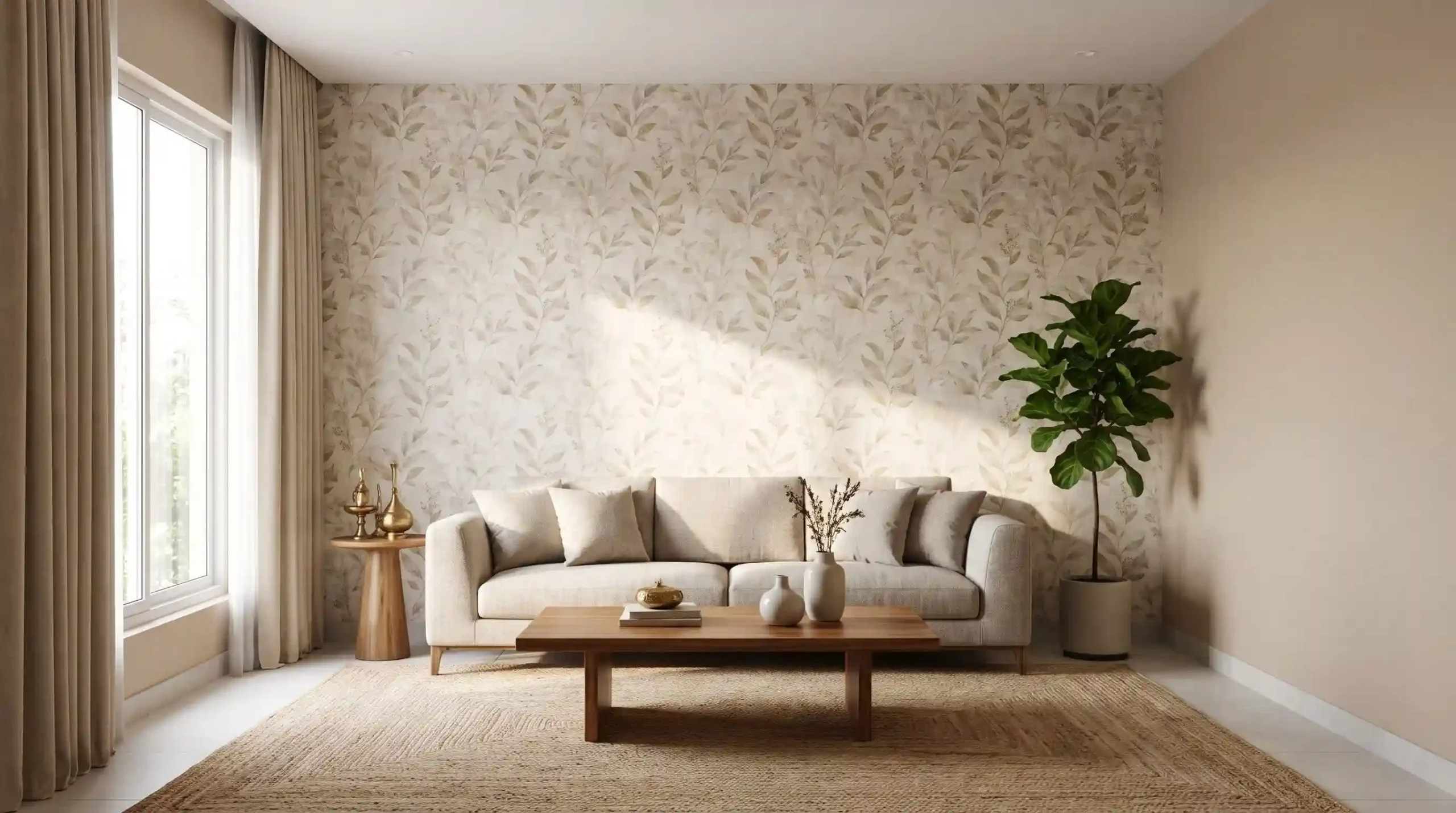
A homeowner repainting their living room every few years eventually asks a different question. Could wallpaper give a longer-lasting, more distinctive look instead? The answer depends on more than personal taste.
What Wallpaper Actually Offers
Wallpaper is a printed or textured material applied directly to the wall surface. Unlike paint, it introduces pattern, texture, and depth in a single application. This makes it possible to achieve looks that paint alone cannot easily replicate, such as fine botanical prints or textured fabric effects.
The trade-off is permanence within a design cycle. Wallpaper is not meant to be changed as casually as a fresh coat of paint. This makes the decision worth more careful thought.
Why Homeowners Choose Wallpaper for Living Rooms
Living rooms often carry more visual weight than other rooms, since they host guests and family gatherings. Wallpaper can create a stronger focal point than paint, particularly on a feature wall behind a sofa or television.
Some homeowners also choose wallpaper for the texture it adds. A textured or patterned surface can make a flat wall feel more layered, even under simple lighting.
Types of Wallpaper Homeowners May Encounter
Several wallpaper categories are common in Indian homes today.
- Vinyl wallpaper is durable and generally easier to wipe clean than paper-based options.
- Paper-based wallpaper often offers finer print detail but tends to be less resistant to moisture.
- Textured or embossed wallpaper adds a tactile surface without relying on strong colour or pattern.
- Fabric-backed wallpaper can offer a softer, richer appearance, though it usually needs more careful handling.
Each type differs in durability, cost, and maintenance needs. The manufacturer’s specifications, not general assumptions, should guide the final choice for any specific product.
Choosing Wallpaper Based on Room Size
Pattern scale interacts directly with room size. A large, bold pattern can overwhelm a small living room, making the walls feel like they’re pressing inward. A smaller or subtler pattern often works more comfortably in tighter spaces.
Larger living rooms have more room to absorb bold patterns without feeling crowded. This does not mean bold patterns are automatically better in big rooms. It means the room can support more visual density if the homeowner wants it.
Visual density matters as much as pattern size. A busy pattern across every wall can make even a large room feel visually restless.
Choosing Wallpaper Based on Natural Light
Living rooms with strong natural light can handle deeper colours and richer patterns without feeling closed in. Sunlight naturally balances the added visual weight of a darker wallpaper.
Rooms with limited natural light often benefit from lighter tones or more open patterns. A dark, dense wallpaper in a dim room can make the space feel smaller than it actually is.
This is not an absolute rule. Lighting fixtures and wall placement also influence how a wallpaper colour reads in a specific room.
Choosing the Right Pattern
Different pattern styles suit different living room moods.
- Subtle patterns work well when the room already has strong furniture or artwork.
- Geometric patterns can add structure to a room with softer, curved furniture.
- Botanical patterns often suit living rooms that want a calmer, natural feel.
- Textured designs add depth without introducing strong colour or shape.
- Statement patterns work best on a single wall rather than an entire room.
The right pattern depends on the room’s existing furniture, lighting, and how much visual attention the homeowner wants the wall to draw.
Wallpaper for Accent Walls
Many homeowners choose wallpaper for just one wall rather than the entire room. This approach limits visual intensity while still creating a clear focal point.
An accent wall works particularly well behind a sofa, television, or dining area within an open-plan living space. It allows a bolder pattern choice, since the remaining walls stay neutral and balance the room.
Covering every wall with a strong pattern can work in larger rooms with high ceilings, but it requires careful planning around furniture and lighting to avoid feeling overwhelming.
Wallpaper Versus Paint
Wallpaper and paint each offer different strengths, and neither is universally better.
Wallpaper introduces pattern and texture that paint cannot easily match. It can hide minor wall imperfections better than a flat paint finish in some cases. However, changing wallpaper later is more involved than repainting a wall.
Paint offers more flexibility for future changes and is generally simpler to touch up. It suits homeowners who like to refresh their space frequently or want a more neutral backdrop for furniture and art.
Maintenance differs too. Some wallpapers can be wiped clean depending on their material, while paint’s cleaning approach depends on the finish used. The right choice depends on how often the homeowner expects to update the room.
Wallpaper Versus Wall Panelling
Wallpaper and wall panelling solve different design needs. Panelling adds physical depth and structure to a wall, often combined with integrated lighting or hidden storage.
Wallpaper adds pattern and colour without changing the wall’s physical profile. It suits homeowners who want visual impact without construction work.
Some living rooms combine both, using panelling on one section and wallpaper on another. The right approach depends on the room’s layout and the effect the homeowner wants to achieve.
Hyderabad Climate Considerations
Hyderabad’s humidity can affect how certain wallpaper materials perform over time. Moisture exposure varies by product, so homeowners should confirm a wallpaper’s suitability for their specific room conditions.
Manufacturer guidance is the most reliable source for this information, since materials and coatings differ between products. A wallpaper that performs well in a dry, ventilated room may behave differently in a space with limited airflow.
Dust is also a practical consideration in many Indian homes. Textured wallpapers can collect more dust than smooth finishes, which affects how often cleaning is needed.
Maintenance Considerations
Cleaning requirements depend entirely on the wallpaper material chosen. Some wallpapers can be wiped with a damp cloth, while others require dry cleaning only, based on manufacturer instructions.
Households with children or pets should consider how forgiving a wallpaper is to marks and scuffs. A washable option often suits high-touch areas better than a delicate paper-based print.
Living rooms see more daily use than most other rooms in a home. This makes maintenance a genuinely important factor, not just a secondary concern.
Installation Considerations
Wall condition affects how wallpaper looks once installed. A smooth, dry, and even surface generally provides a better base than a wall with cracks, dampness, or uneven texture.
Existing paint condition matters too, since flaking or peeling paint can affect adhesion. Addressing these issues before installation avoids problems appearing later.
Pattern alignment also requires attention, particularly with bold or geometric designs. Professional installation is generally recommended for accurate alignment and long-term durability.
Choosing Wallpaper for an Indian Home
Wallpaper choice should reflect the room’s existing elements rather than stand apart from them. Furniture colour and material, flooring tone, and curtain fabric all influence how a wallpaper reads in the space.
Lighting also plays a role, since warm or cool light sources can shift how a colour or pattern appears. Considering these elements together, rather than choosing wallpaper first, generally leads to a more cohesive result.
Common Wallpaper Selection Mistakes
Homeowners often choose a pattern from a small sample without picturing it across an entire wall. A pattern that looks appealing in a small swatch can feel very different at full scale.
Ignoring natural light is another common mistake, since a colour tested under artificial light may look different during the day. Matching wallpaper only to the sofa, while ignoring flooring and curtains, can also create an unbalanced room.
Covering every wall without considering visual balance often makes a room feel busier than intended. Choosing wallpaper before finalising furniture and lighting can also lead to mismatched decisions later. Overlooking wall condition before installation is a frequent and avoidable error.
When Wallpaper May Not Be the Right Choice
Wallpaper is not the right fit for every living room. Rooms with damp walls, poor ventilation, or ongoing structural issues may not suit wallpaper until those problems are resolved.
Homeowners who prefer frequent colour changes may find paint more practical than wallpaper. In some cases, a simpler wall treatment better suits a room’s function or the household’s lifestyle.
What to Discuss With an Interior Designer
Before finalising a wallpaper choice, it helps to discuss the room’s actual wall condition with a designer. Room size, natural light, and existing furniture should shape the conversation as much as personal preference.
Maintenance expectations, climate suitability, and installation requirements are also worth raising early. Discussing placement, whether full-wall or accent, and future flexibility helps avoid regret later.
Frequently Asked Questions About Living Room Wallpaper
Is wallpaper good for a living room?
Wallpaper can work well in a living room, especially as a focal point. Suitability depends on the room’s light, size, and wall condition.
Is wallpaper better than paint for a living room?
Neither is universally better. Wallpaper offers pattern and texture, while paint offers easier updates and flexibility.
Which wallpaper is best for a small living room?
Smaller or subtler patterns generally work better in small rooms than large, bold designs.
Can wallpaper work in a humid climate?
Some wallpaper materials handle humidity better than others. Always check manufacturer guidance for your specific product and room conditions.
Is wallpaper difficult to maintain?
Maintenance depends on the material. Some wallpapers can be wiped clean, while others need more careful, dry cleaning only.
Should wallpaper go on every living room wall?
Not necessarily. Many homeowners choose one accent wall to create impact without overwhelming the room.
Can wallpaper be changed later?
Yes, but changing wallpaper is more involved than repainting, so it’s worth choosing carefully.
Making a Considered Choice
Wallpaper can add genuine character to a living room, but the right choice depends on the room itself. Light, size, furniture, and maintenance habits all shape how well it performs over time.
If you’re weighing wallpaper against other wall treatments, it helps to think through these factors before deciding. LH Interiors works with homeowners across Hyderabad on living room and full home interior planning. The team can help you evaluate what suits your space.