
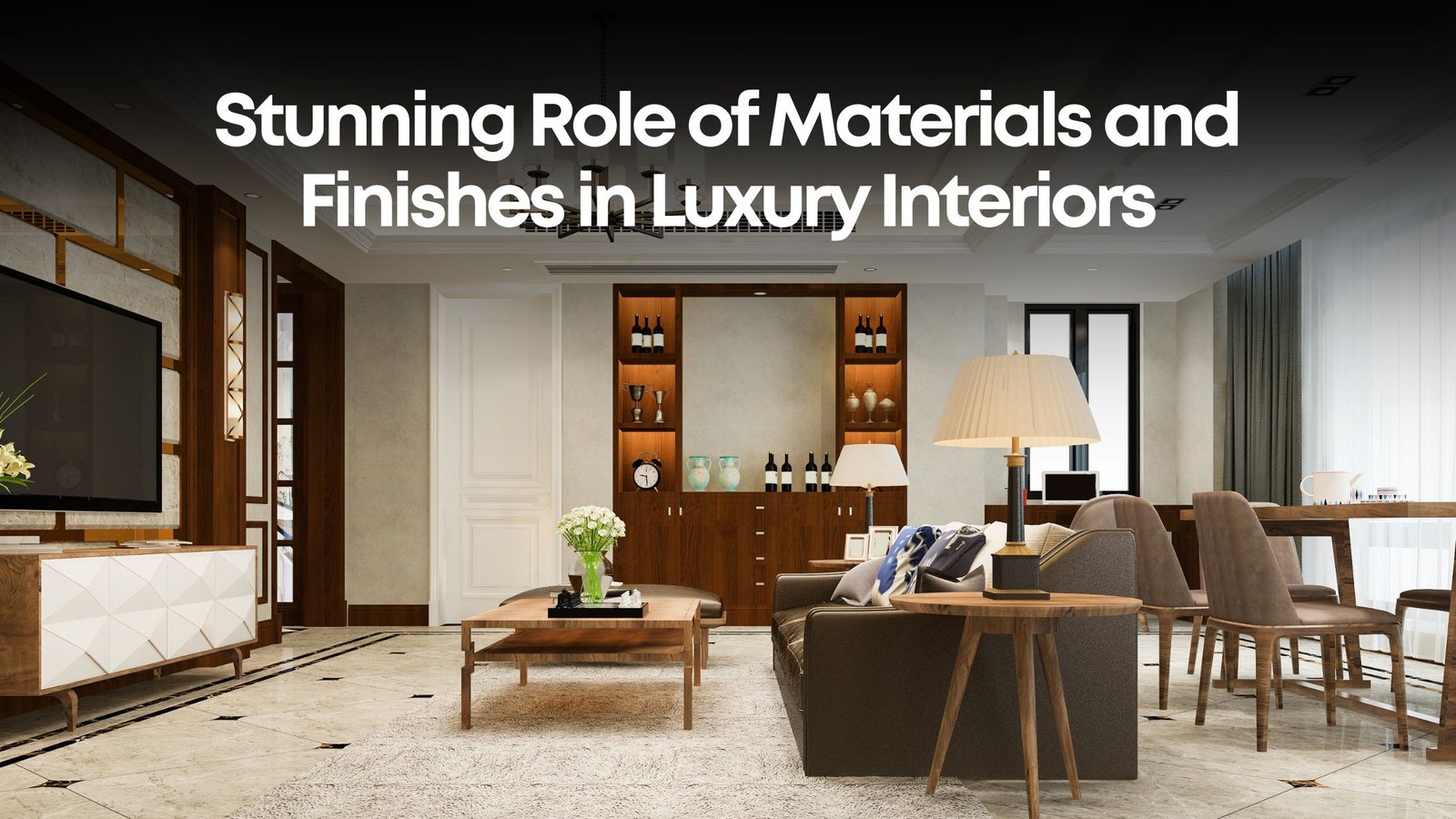
Walk into a home that instantly feels elegant and comfortable, and you’ll notice something before you even focus on the furniture. It’s the surfaces around you. The warmth of natural wood, the richness of stone, the softness of fabric, and the subtle texture on the walls all work together to create that feeling.
That’s the true role of materials in interior design.
Luxury interiors are rarely defined by expensive décor alone. They stand out because every material has been chosen with care. The finishes complement one another, age beautifully, and make the space feel inviting every day—not just on the day it’s completed.
If you’re designing or renovating your home, understanding how materials influence the overall experience will help you make smarter decisions. This guide explains why materials matter and how to choose finishes that bring lasting beauty to your interiors.
Why the Role of Materials Matters More Than Most People Think
When homeowners begin planning an interior, they usually focus on colours, furniture, or decorative pieces. Those choices are important, but the materials underneath them have a much bigger impact.
Materials influence almost everything about a room:
- How warm or cool it feels
- How it reflects natural light
- How comfortable it is to walk through
- How well it handles daily wear
- How the space looks after several years
A polished marble floor creates a completely different atmosphere from wooden flooring. Likewise, a textured wall adds far more character than a perfectly flat painted surface.
The best interiors don’t rely on decoration alone. They rely on thoughtful material selection from the beginning.
Natural Wood Adds Warmth That Never Goes Out of Style
Wood remains one of the most timeless materials used in interior design because it introduces warmth without overwhelming a room.
Whether it’s flooring, wardrobes, dining tables, wall panelling, or ceiling details, wood creates a welcoming environment that feels comfortable throughout the year.
For Indian homes, especially in Hyderabad, engineered wood is often preferred for flooring because it performs better in changing temperatures while maintaining the beauty of natural timber.
For furniture, hardwoods like teak, sheesham, mango wood, and rosewood continue to be popular because they are durable and develop more character with age.
If you’re working within a budget, high-quality veneers are also an excellent option. They provide the appearance of natural timber while remaining practical for custom furniture.
Matte finishes usually work better than glossy ones for family homes. They hide fingerprints more effectively, feel more natural, and continue looking elegant even after years of use.
Stone Brings Lasting Elegance to Luxury Interiors
Few materials create the same visual impact as natural stone.
Marble, granite, quartzite, limestone, and slate each have their own personality, but all bring a sense of permanence that manufactured materials struggle to match.
Marble remains a favourite for feature walls, bathrooms, and premium living spaces because every slab has unique natural veining.
Granite is often the better choice for busy kitchens since it offers greater resistance to scratches, stains, and heat while still providing a luxurious appearance.
Many homeowners are also choosing Indian natural stones like Rajasthan marble, Kota stone, and Kadappa stone because they suit local conditions and celebrate traditional craftsmanship.
When used thoughtfully, stone becomes a feature that never feels outdated.
Soft Fabrics Complete the Space
A room filled only with hard materials can feel cold, regardless of how expensive it looks.
That’s where fabrics become essential.
Curtains, rugs, upholstery, cushions, and bedding soften the overall look while making the home quieter and more comfortable.
Different fabrics create different moods:
- Linen offers a relaxed and natural appearance.
- Velvet introduces richness and depth.
- Cotton keeps interiors light and breathable.
- Wool rugs improve comfort while reducing echo.
One of the simplest ways to create a luxurious interior is by combining different textures instead of relying on a single material throughout the room.
The contrast between smooth stone, warm timber, soft fabrics, and woven elements gives interiors a balanced, layered look.
Metal and Glass Bring Balance and Detail
While wood and stone often take centre stage, metal and glass provide the finishing touches that complete a luxury interior.
Hardware such as handles, taps, light fixtures, and cabinet accessories may seem like small details, but they’re used every day.
Brushed brass has become particularly popular because it introduces warmth without feeling overly decorative.
Matte black finishes suit modern interiors with clean lines, while stainless steel remains a practical choice for kitchens due to its durability.
Glass also plays an important role of materials
Glass partitions, staircase railings, cabinet doors, and shelving help natural light travel through the home while making spaces feel larger and more open.
Used carefully, these materials create elegance without adding visual clutter.
Good Interiors Balance Different Materials
One of the biggest mistakes homeowners make is choosing beautiful materials individually without considering how they’ll work together.
A stunning marble floor, timber furniture, brass lighting, and textured walls can either create harmony—or compete with one another.
Professional designers usually begin by creating a complete material palette before finalising any room.
This helps maintain consistency throughout the house while ensuring every finish complements the next.
A few simple principles make a big difference:
- Pair warm wood with cooler stone surfaces.
- Add soft fabrics wherever there are large hard surfaces.
- Balance glossy finishes with matte textures.
- Repeat key materials throughout different rooms for visual continuity.
When materials feel connected, the entire home feels more thoughtfully designed.
Invest More Where Materials Matter Most
Every surface doesn’t need to be premium.
The smartest approach is to invest where materials experience the most daily use.
Focus your budget on areas like:
- Flooring throughout the home
- Kitchen countertops
- Bathroom surfaces
- Wardrobes and cabinetry
- Door hardware and handles
These are the finishes you’ll touch and see every day.
Choosing durable, high-quality materials here often reduces maintenance costs while keeping your interiors looking beautiful for years.
Decorative accessories can always be updated later, but replacing flooring or kitchen surfaces is much more expensive.
Material Choices Should Match Your Lifestyle
The best material isn’t always the most expensive one.
It is the one that suits the people living in the home.
A family with young children may benefit from scratch-resistant flooring and stain-resistant upholstery.
Someone who entertains regularly may prioritise durable dining surfaces.
A homeowner who prefers minimal maintenance might choose engineered stone over natural marble in certain spaces.
This practical thinking is what separates good design from interiors that simply look attractive in photographs.
The role of materials isn’t only about appearance. It’s about creating a home that’s enjoyable to live in every single day.
Create Interiors That Feel Beautiful for Years
Luxury interiors are built on thoughtful choices, not unnecessary extravagance, because of the role of materials
Natural wood, quality stone, carefully selected fabrics, balanced textures, and durable finishes all contribute to a home that feels timeless instead of trendy.
When every material has been chosen for both beauty and performance, the result is a space that remains elegant long after the latest design trends have changed the style with the role of materials
At LH Interiors, material selection is one of the first conversations we have with every homeowner. We believe great interiors begin with finishes that complement your lifestyle, your home, and the way you live every day.
If you’re planning a new home or renovating your existing one, we’d be happy to help you choose materials that combine lasting quality with timeless style and the role of materials
The right materials don’t simply make a house look luxurious—they make it feel comfortable, authentic, and built to last.