
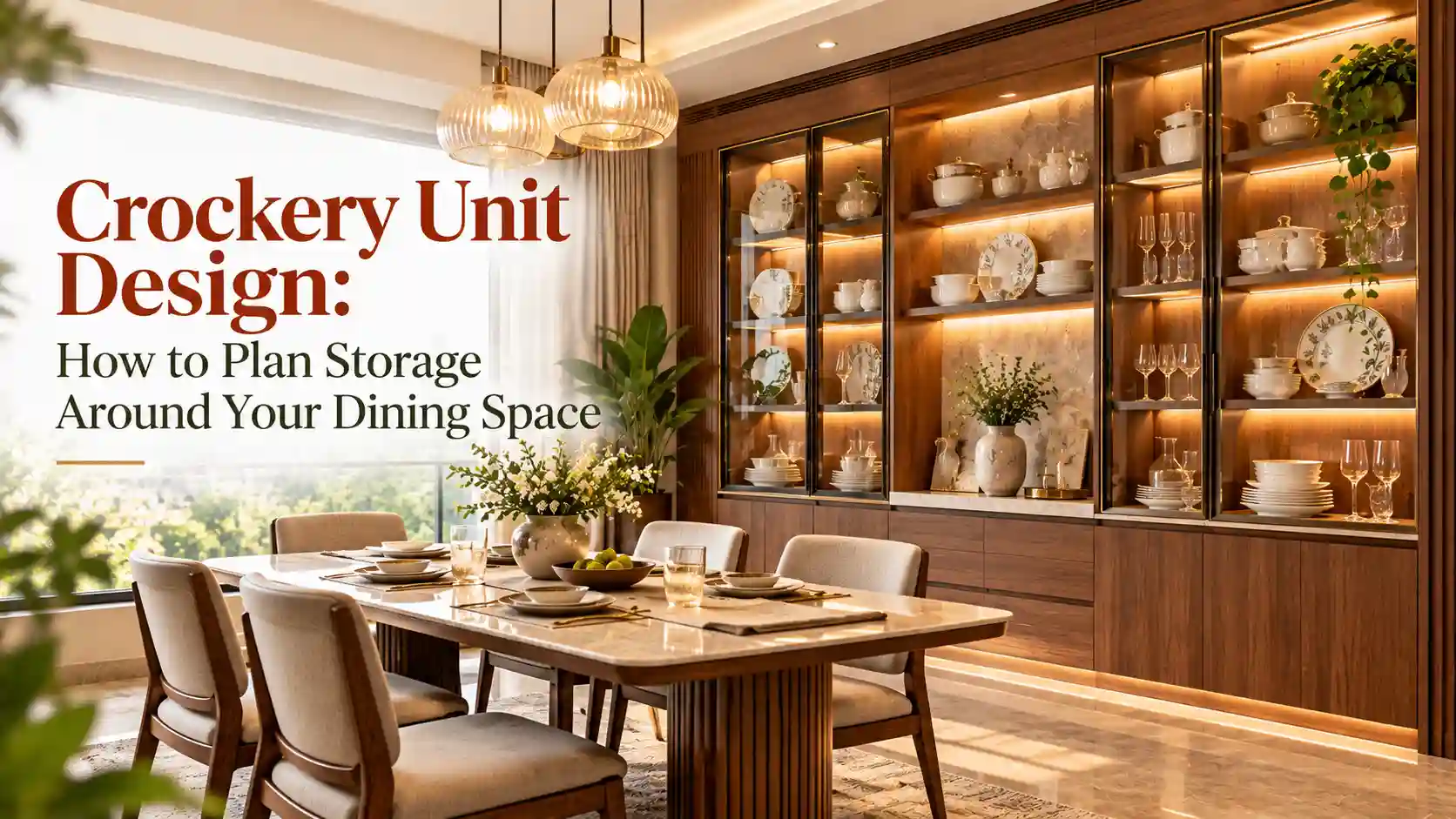
A dining area often becomes a collection point for plates, serving bowls, glasses, and other everyday essentials. Without a proper arrangement, these items can take up kitchen space or leave the dining table cluttered.
A thoughtful crockery unit design can give these belongings a dedicated place while complementing your home’s interiors. The right arrangement should reflect what your family owns, how often you entertain guests, and how much room you have available.
Instead of choosing a cabinet simply because it looks attractive, begin with your daily routine. This helps you create a dining area that feels organised and comfortable to use.
Why Should You Plan a Crockery Unit Around Your Lifestyle?
Every household uses its dining space differently. Some families need easy access to everyday plates and glasses. Others want space for special dinner sets, serving dishes, and items used during celebrations.
These differences should influence the design from the beginning. A cabinet made mainly for displaying decorative pieces may not provide enough useful storage for a busy household.
Think about the items you reach for most often. Also consider which belongings you prefer to keep out of sight.
For example, a family that regularly hosts guests may need room for serving dishes and extra glasses. A smaller household may prefer a compact unit that keeps everyday essentials within reach.
The aim is to make storage work around your routine rather than changing your habits to suit the furniture.
1. Decide What Belongs Inside the Unit
Before selecting a design, make a list of the items you want to store. This simple step can help prevent wasted compartments and overcrowded shelves.
You do not need to display everything. Frequently used items should be convenient to access, while special pieces can remain protected until needed.
| Items you own | Planning consideration |
| Everyday plates and bowls | Keep them in an easily accessible section |
| Glasses and cups | Arrange them according to their sizes and frequency of use |
| Serving dishes | Allow enough room for larger pieces |
| Special dinner sets | Consider protected storage for occasional use |
| Table accessories | Use suitable compartments for smaller belongings |
| Decorative crockery | Reserve selected areas for pieces you want to display |
This list can help you discuss the internal layout before the unit is made. Your actual collection should determine the final arrangement.
2. Choose a Design That Suits Your Dining Area
The available space should guide the overall shape of the unit. A large cabinet may suit a spacious dining room, while a smaller home may need a more compact arrangement.
Consider the wall where the unit will sit and how people move around the table. Check nearby doors, windows, chairs, and other furniture before finalising its position.
The unit should remain convenient to access without interrupting everyday movement.
| Dining space | Design approach to consider |
| A compact dining corner | A simple unit that uses the available wall efficiently |
| A dedicated dining room | A larger arrangement with separate storage and display sections |
| An open living and dining area | A finish that connects with the surrounding interiors |
| A dining space beside the kitchen | A location that makes serving and putting away dishes convenient |
| A room with limited wall space | A layout planned around existing furniture and circulation |
These options are starting points, not fixed recommendations. The right choice depends on your room’s dimensions and storage needs.
3. Balance Display With Everyday Storage
A crockery unit can provide both useful storage and an opportunity to display selected pieces. The challenge is deciding how much of each you need.
Open shelves make displayed items visible. They can also make a unit feel less enclosed. However, the contents remain exposed and may need regular cleaning.
Closed cabinets keep items out of sight and create a more contained appearance. They can be useful for everyday crockery or pieces you do not want to display.
A combination of both may suit households with varied storage needs.
Before choosing, ask yourself whether the main purpose is display, storage, or a balance between the two. This decision will help guide the layout.
4. Select Finishes That Belong in Your Home
The crockery unit should feel connected to the dining area rather than looking like an unrelated piece of furniture.
Look at the dining table, nearby cabinets, wall colours, and flooring before selecting the finish. You can coordinate these elements without making everything identical.
A wood-inspired finish may complement a warm interior. A lighter finish may suit a softer colour palette. A contrasting shade can also work when the surrounding elements provide enough balance.
The important thing is to consider the combination as a whole.
If you are planning several built-in elements, reviewing samples together can make the decision easier. It also helps the design team understand the appearance you want to achieve.
5. Think About How You Will Use the Unit
A well-planned unit should be convenient during ordinary meals, not only when guests visit.
Consider the movement between the kitchen, dining table, and storage. You should be able to collect plates or serving dishes without moving chairs unnecessarily.
Also check how cabinet doors and drawers will open. A door that clashes with nearby furniture can make a beautiful design frustrating to use.
Before execution, review the layout with the actual dining furniture in mind.
| Detail to check | Why it matters |
| Cabinet access | Frequently used items should be easy to reach |
| Drawer placement | Drawers should open without obstructing nearby furniture |
| Shelf arrangement | Compartments should suit the items stored inside |
| Table position | Access to the unit should remain convenient |
| Room circulation | People should be able to move comfortably around the dining area |
These checks are easier to address during planning than after installation.
6. Use Lighting Only Where It Adds Value
Lighting can highlight selected pieces inside a display section. It can also connect the unit with the lighting already used in the dining area.
However, additional lighting is not necessary for every design. A simple cabinet can look complete without decorative illumination.
If you want lighting inside the unit, consider which shelves need it and how the light will appear from the dining table. The placement should suit the cabinet’s layout and the room’s existing lighting.
It is also worth considering how the unit will look during the day and evening. The finished arrangement should feel comfortable in both situations.
Discuss these details before the furniture and lighting work are finalised.
7. When Should You Consider Custom Crockery Unit Design?
A ready-made cabinet may suit some homes. However, its dimensions and internal arrangement may not match every dining area.
Custom crockery unit design allows the storage to be planned around your available space and belongings. It can also help coordinate the unit with other built-in furniture.
For example, a homeowner may need more closed storage than display shelves. Another may want a simple unit that complements an existing dining table and wall finish.
Customisation is most useful when it solves a specific problem. Begin by identifying what does not work with your current arrangement, then decide which features would improve it.
For homeowners working with custom interior designers in Hyderabad, discussing the dining unit alongside the wider home interiors can help create a more connected result.
8. Mistakes Worth Avoiding Before Installation
Some design decisions may look appealing initially but become inconvenient during daily use.
- Choosing the design before checking your belongings: Plan the compartments around the items you actually need to store.
- Using every shelf for display: Leave enough space for practical storage.
- Ignoring nearby furniture: Check how doors, drawers, and dining chairs will interact.
- Selecting finishes separately: Review the unit alongside the dining table and surrounding interiors.
- Adding features without a clear purpose: Choose lighting and decorative details only when they improve the design.
- Leaving decisions until installation: Confirm the layout, finishes, and storage requirements before execution.
A little preparation can make the finished unit more useful and easier to maintain.
How LH Interiors Can Help With Your Dining Space
Planning a crockery unit involves more than selecting a cabinet style. It requires attention to the available space, furniture arrangement, storage needs, and overall appearance.
LH Interiors works on residential spaces with a focus on tailored furniture, space arrangement, material selection, and lighting. These elements can be considered together when planning a dining area.
Homeowners searching for the best interior designers in Hyderabad should look for a team that understands their requirements and can coordinate individual design decisions with the complete home.
The aim is not to add unnecessary features. It is to create an arrangement that suits the household and feels connected to the rest of the interior.
Frequently Asked Questions
What should I consider before choosing a crockery unit?
Start with the items you need to store and the space available in your dining area. Then consider the unit’s position, internal arrangement, finish, and access.
Is open storage better than closed storage?
Neither option is automatically better. Open shelves display selected pieces, while closed cabinets keep items out of sight. Your household’s habits should guide the decision.
Can a crockery unit suit a small dining area?
Yes. A compact arrangement can work when it fits the available wall and preserves comfortable movement. Measure the space before finalising the design.
Should the crockery unit match the dining table?
The finishes should work together, but they do not have to be identical. Coordinated colours and materials can create a connected appearance without making the room look repetitive.
Is custom crockery unit design worth considering?
It can be useful when standard furniture does not suit your space or storage requirements. Customisation allows the layout and finish to be planned around your specific needs.
Final Thoughts
A crockery unit should make everyday dining easier while contributing to the appearance of your home. Start with your belongings, consider the available space, and choose features that support your routine.
The most suitable design is not necessarily the largest or most decorative one. It is the arrangement that provides useful storage, remains convenient to access, and fits naturally into the dining area.
If you are planning new home interiors, LH Interiors can help you explore a design that suits your space and preferences. A well-planned dining area can bring together practical storage and a more considered overall look.