
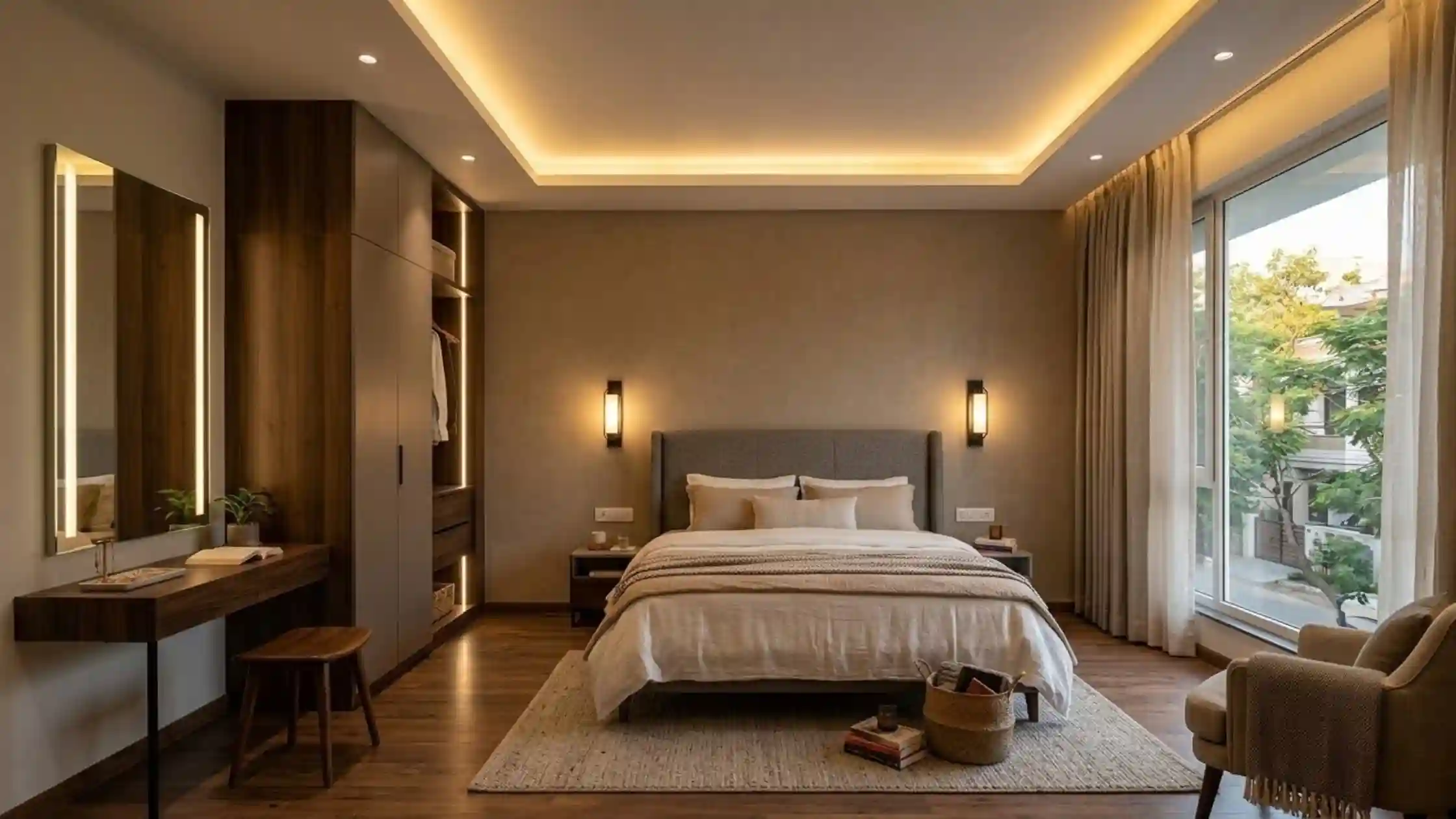
A bedroom needs different levels of illumination throughout the day. Getting ready in the morning requires clarity. Reading at night needs focused brightness. Resting calls for something softer.
Bedroom lighting design brings these different needs into one coordinated plan. Instead of selecting fixtures separately, it considers placement, switching, daylight, furniture, wardrobes, ceilings, and daily routines together.
A well-planned scheme should support practical activities without making the setting unnecessarily bright. The following considerations can help homeowners make better decisions before electrical work and interiors are finalised.
Start With How the Bedroom Is Used
Every household follows a different routine. Understanding that routine should come before selecting fixtures.
Consider what normally happens after entering the bedroom. Someone may change clothes, use a dressing unit, read, watch television, or work briefly before sleeping.
Each activity creates different visibility requirements.
A couple may also follow different schedules. One person might read while another rests. Independent controls can become useful in such situations.
Think about morning routines as well. Wardrobes and dressing units usually require clearer visibility than the sleeping zone.
Mapping these activities first makes later decisions more purposeful.
Plan Around the Bed Position
The bed usually establishes the main orientation of a bedroom. Its position influences bedside fixtures, switches, ceiling points, and feature treatments.
Plan these relationships together.
Bedside illumination should be accessible without requiring someone to cross the bedroom. Switches should also remain convenient after the final furniture position is confirmed.
Wall-mounted fixtures can keep bedside surfaces clearer. Pendant-style options may create a different visual effect.
The right choice depends on the overall composition and practical requirements.
Avoid selecting decorative fittings before confirming bed dimensions and headboard details. Changes later can leave electrical points poorly aligned.
Give Bedside Lighting a Clear Purpose
Bedside illumination can support reading, movement, or a softer evening atmosphere. One fitting does not always perform every function equally well.
A reading source needs useful direction. Decorative glow may provide atmosphere but insufficient visibility for a book.
Consider who will use each side of the bed. Independent operation can offer greater flexibility for different sleeping schedules.
Placement also matters.
A poorly positioned fitting may shine directly into someone’s eyes. Another may cast shadows exactly where clearer visibility is needed.
Review the intended activity before deciding fixture height, direction, and control points.
Coordinate the Ceiling Early
Ceiling decisions should not happen separately from the electrical plan.
False ceiling details, recessed fixtures, fans, air-conditioning elements, and other services can compete for the same overhead area.
Establish the major positions before adding decorative effects.
A central source alone can create uniform brightness but may not support every activity comfortably. Multiple sources provide greater flexibility when each has a defined role.
Avoid filling the ceiling with unnecessary spots simply to create symmetry.
Their positions should relate to furniture, circulation, wardrobes, or specific surfaces requiring illumination.
A simpler overhead arrangement can often feel calmer.
Consider Wardrobe Visibility
Wardrobes need enough visibility for selecting clothes and organising belongings.
First consider the illumination already available outside the cabinet. A nearby ceiling source may provide sufficient support in some layouts.
Internal illumination can be useful for deeper compartments or particular configurations. It should be considered during joinery and electrical coordination.
Door type also affects the experience. Open shutters can sometimes block or redirect nearby brightness.
The surrounding arrangement therefore matters as much as the fitting itself.
Avoid adding internal strips purely for visual effect. They should improve usability and integrate cleanly with the cabinetry.
Give the Dressing Area Separate Attention
A dressing unit has different requirements from a sleeping zone.
The face should receive balanced illumination without strong shadows. A source positioned only above the mirror may not always provide the desired result.
Consider the mirror, surrounding cabinetry, nearby window, and artificial sources together.
Reflections also deserve attention. Highly reflective surfaces can create uncomfortable glare when fixtures face them directly.
Electrical points for grooming devices should be coordinated at the same stage.
This creates a more functional dressing arrangement without relying on additional fittings after completion.
Use Daylight as Part of the Plan
Artificial illumination should respond to the daylight already entering through windows.
Observe where sunlight reaches during the morning and later hours. Furniture and tall cabinetry should not unnecessarily obstruct useful openings.
Curtains or other window treatments will also influence available brightness.
A dressing point near strong daylight may perform differently after sunset. That means artificial support should still be considered.
Likewise, a darker corner may need more attention even when the window side remains bright.
Understanding these differences helps avoid treating the entire bedroom as one uniformly lit area.
Control Glare Around Screens and Reflective Surfaces
Bedrooms increasingly contain televisions, mirrors, glossy finishes, and other reflective elements.
Fixture placement should account for these surfaces.
Direct reflections can become distracting while watching television or relaxing. Bright sources within the normal line of sight may also feel uncomfortable.
Before finalising positions, consider where people will sit or lie down.
Then examine what falls within those viewing angles.
Small changes in direction or placement can improve visual comfort without requiring additional fixtures.
The aim is balanced visibility rather than maximum brightness.
Connect Lighting With the Interior Materials
The same source can look different against various finishes.
Dark surfaces may absorb more illumination. Pale finishes can reflect it more strongly. Glossy materials may produce noticeable reflections.
Wood, paint, laminates, fabrics, and textured surfaces therefore influence the final effect.
Review these selections as part of one composition.
A warm material palette may respond differently to a fitting than a cooler scheme. Samples can also appear different under daylight and artificial sources.
Considering these relationships early helps avoid unexpected results after installation.
Think About Switches Before Execution
Switch placement has a major effect on everyday convenience.
The main controls should make sense when entering or leaving the bedroom. Bedside access can reduce the need to get up after settling down.
Different sources may also need independent operation.
Grouping everything under one switch limits flexibility. Separating useful functions allows homeowners to choose what they need at a particular moment.
Electrical planning should happen after the furniture arrangement becomes clear.
Otherwise, switches can end up behind headboards, cabinets, or other fixed elements.
Early coordination helps keep controls accessible without compromising the visual composition.
Coordinate Lighting With Built-In Elements
Joinery and illumination often meet around wardrobes, headboards, dressing units, shelves, and work points.
Planning them separately can create awkward details.
For example, a cabinet may cover a previously planned electrical point. A decorative panel may change the position required for a wall-mounted fitting.
Integrated illumination also requires space for wiring and related components.
These details should be resolved before fabrication begins.
Coordination between the electrical layout and custom woodwork produces a cleaner result. It can also reduce unnecessary changes during installation.
Keep Decorative Lighting Under Control
Bedrooms can include pendants, wall fixtures, concealed sources, or other decorative elements. Using all of them together is rarely necessary.
Choose features that support the overall concept.
A statement pendant may be enough in one setting. Another bedroom may benefit from understated wall-mounted fittings instead.
Decorative choices should not compete with the headboard, ceiling, artwork, and other focal elements.
Restraint can create a calmer visual experience.
Before adding another fitting, ask whether it improves function, atmosphere, or composition. If it does none of these, it may not be needed.
Avoid Common Planning Mistakes
One common mistake is selecting fixtures before finalising furniture positions.
Another is relying entirely on a bright central source.
Excessive ceiling spots can also create unnecessary visual activity. Poorly positioned bedside fittings may cause glare instead of supporting reading.
Wardrobe and dressing requirements are sometimes considered too late. This can lead to additional wiring or surface-mounted solutions after installation.
Ignoring switch positions creates another inconvenience.
Finally, decorative effects should not replace practical visibility.
A successful scheme balances everyday function with the atmosphere expected from a restful setting.
Bring the Complete Scheme Together
Good results come from coordinating several decisions rather than choosing each fitting independently.
Bed placement influences bedside points. Wardrobes affect visibility requirements. Dressing units introduce mirror considerations. Ceiling details influence overhead positions.
Daylight, materials, electrical access, and switching add further relationships.
LH Interiors lists Artful Lighting Solutions alongside space arrangement, material selection, and other residential interior services.
Considering these elements together can create a bedroom that supports morning routines, evening activities, and relaxation without unnecessary complexity.
The goal is not more fixtures. It is the right illumination in the right places for how the bedroom is actually used.
Frequently Asked Questions
What should be planned first for bedroom lighting?
Start with furniture positions and daily activities. Then coordinate electrical points, switches, ceiling details, and required fixtures around those decisions.
Is one ceiling light enough for a bedroom?
It may provide general brightness, but different activities can benefit from separate sources designed for their specific purpose.
How should bedside lighting be planned?
Consider reading habits, bed dimensions, headboard details, viewing angles, accessibility, and whether each side needs independent control.
Does a wardrobe need internal lighting?
Not always. The decision depends on cabinet depth, configuration, surrounding illumination, and how easily belongings can already be seen.
What should I consider around a dressing mirror?
Review the mirror position, nearby daylight, reflections, shadows, electrical access, and artificial sources as one coordinated arrangement.
When should electrical points be finalised?
Finalise them after major furniture and built-in positions are established, but before execution makes changes difficult.
How can I avoid over-lighting a bedroom?
Give every source a clear purpose. Avoid adding fixtures solely for symmetry or decoration when they do not improve usability.