
Introduction
The kitchen is one of the busiest spaces in any home. It’s where meals are prepared, conversations happen, and families spend quality time together. A thoughtfully planned kitchen interior not only improves the appearance of your home but also makes everyday cooking and organizing much more convenient.
Designing a kitchen involves more than choosing stylish cabinets or attractive countertops. A successful kitchen balances functionality, storage, lighting, and aesthetics to create a space that works for your lifestyle. Whether you’re building a new home or renovating your existing kitchen, these practical tips will help you make informed design decisions.
1. Set a Clear Budget Before You Begin
Every successful kitchen project starts with proper planning. Before selecting materials or meeting designers, determine how much you are comfortable spending.
Your budget should cover:
- Cabinets and storage
- Countertops
- Flooring
- Lighting
- Appliances
- Plumbing and electrical work
- Interior design services
Having a realistic budget allows you to prioritize important features while avoiding unexpected expenses during the project.
2. Choose the Right Kitchen Interior Designer
A professional designer can help you make the most of your available space while creating a kitchen that reflects your personal style.
Before hiring a designer, take time to research their previous work. Look through their portfolio to understand their design approach and see if it matches your preferences. Reading client reviews and checking their experience can also help you make a confident decision.
When choosing a kitchen interior designer, consider:
- Experience with residential kitchen projects
- Portfolio of completed designs
- Client testimonials
- Communication and understanding of your requirements
- Ability to work within your budget
Working with someone who understands your vision makes the entire design process much smoother.
3. Plan the Kitchen Layout Carefully
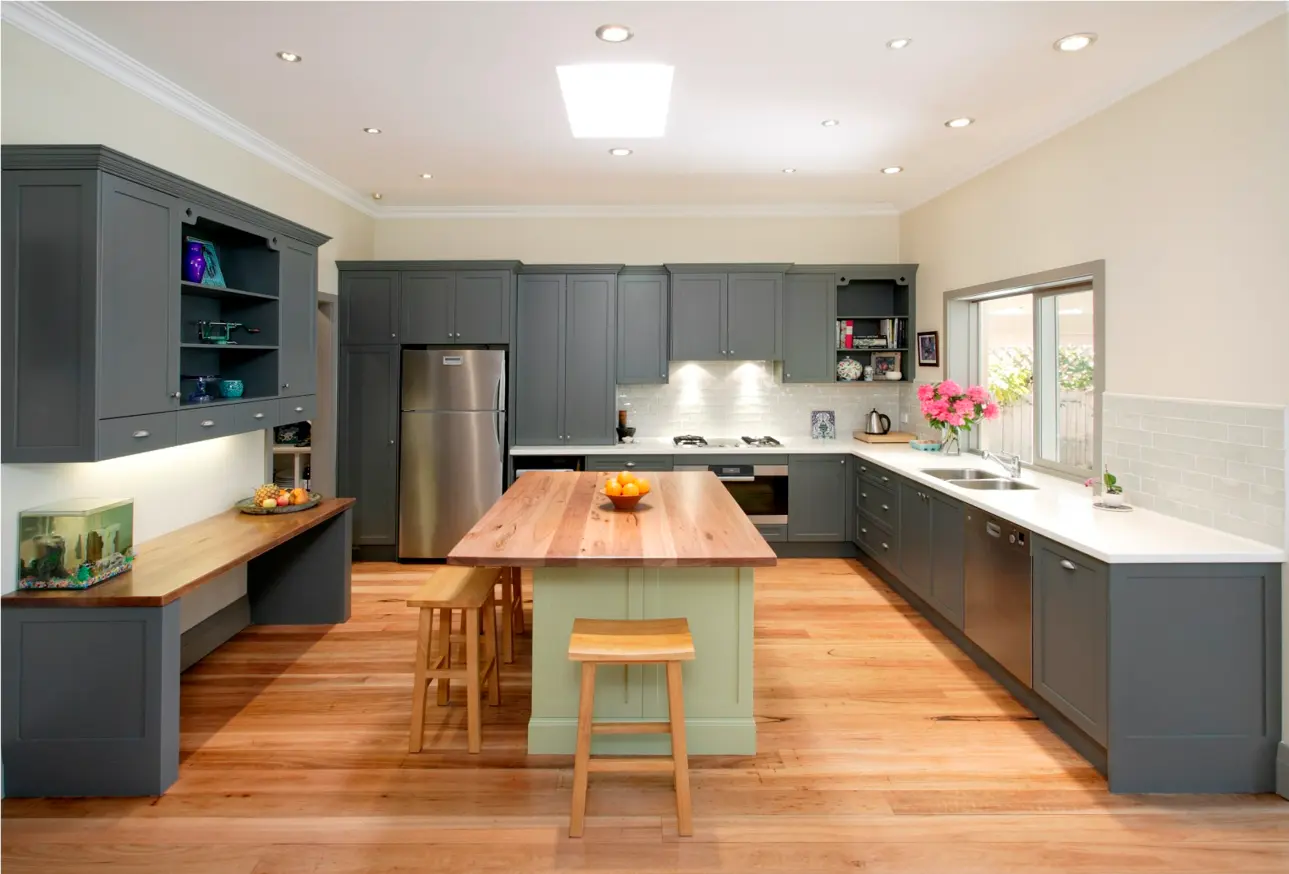
The layout is one of the most important parts of any kitchen interior. A well-planned kitchen improves movement, reduces clutter, and makes cooking more enjoyable.
Think about how you use your kitchen every day. The placement of the sink, stove, and refrigerator should allow you to move comfortably between them.
Popular kitchen layouts include:
- L-shaped kitchens
- U-shaped kitchens
- Parallel kitchens
- Island kitchens
- Straight kitchens
Choose the layout that best suits your available space and your family’s needs.
4. Prioritize Storage and Functionality
A beautiful kitchen should also be practical. Smart storage solutions help keep countertops clean and make everyday tasks easier.
Consider including:
- Deep drawers for cookware
- Pull-out pantry units
- Corner storage solutions
- Overhead cabinets
- Built-in organizers for cutlery and utensils
Efficient storage reduces clutter and ensures everything has its designated place.
5. Select a Design Style That Stands the Test of Time
Kitchen trends change frequently, but timeless designs remain attractive for years. Instead of choosing styles that may quickly become outdated, focus on designs that combine elegance with functionality.
Neutral colors, clean cabinet designs, quality materials, and durable finishes create a kitchen that stays stylish for a long time.
You can always introduce current trends through accessories, lighting, or decorative elements without changing the entire kitchen.
Pay Attention to Materials and Finishes
The materials you choose will influence both the appearance and durability of your kitchen.
Some popular options include:
- Quartz or granite countertops
- Solid wood or engineered cabinets
- Ceramic or vitrified floor tiles
- Stainless steel hardware
- Easy-to-clean backsplash materials
Investing in quality materials reduces maintenance and ensures your kitchen remains attractive for years.
Use Proper Lighting Throughout the Kitchen
Lighting is often overlooked during kitchen planning, but it has a significant impact on both functionality and ambiance.
A combination of different lighting types creates the best results:
- Ambient lighting for overall brightness
- Task lighting under cabinets for food preparation
- Pendant lights above islands or dining counters
- Accent lighting to highlight design features
Good lighting makes cooking safer while enhancing the overall appearance of the kitchen.
Work Closely with Your Designer
Open communication is essential during a kitchen renovation. Share your daily routine, cooking habits, storage requirements, and design preferences with your interior designer.
Discuss:
- Preferred color palette
- Cabinet finishes
- Appliance placement
- Storage requirements
- Ventilation options
- Future maintenance needs
The more information your designer has, the better they can create a kitchen that suits your lifestyle.
Balance Style with Practicality
A visually appealing kitchen is important, but it should also be easy to use and maintain. Choose finishes that resist stains, cabinets that offer sufficient storage, and layouts that allow comfortable movement.
A practical design will continue to serve your family long after the latest design trends have changed.
Conclusion
Designing the perfect kitchen interior begins with thoughtful planning and smart decision-making. Setting a clear budget, selecting an experienced designer, planning an efficient layout, maximizing storage, and choosing timeless materials all contribute to creating a kitchen that is both beautiful and functional.
With the right design approach, your kitchen can become more than just a place to cook. It can be a welcoming space where style, comfort, and practicality come together to support your everyday life for years to come.